Let’s get to know each other
Accelerate your business potential with our dedicated team.

Rebranding Strategy
Refresh Your Brand
DECEMBER 03, 2025 5 MINUTES 10 SECONDS
BRANDING
Content
Let’s define rebranding first. Rebranding is essentially the process of giving your business a new identity, whether that identity is accomplished through design, messaging, or a complete overhaul of your market positioning. Adding a new logo or altering the font are only two aspects of a rebrand. It’s about changing perceptions, realigning with your audience, and staying relevant in a noisy, competitive world.
The rebranding definition can vary, but one thing’s universal: if done right, it can inject new life into a business and set the tone for growth. If done wrong… well, let’s just say you might end up as a meme.
Key Takeaways- Rebranding isn’t just a new logo, it’s a shift in perception and positioning.
- Companies rebrand to stay relevant, reach new audiences, and fix outdated brand impressions.
- A brand refresh updates visuals; a full rebrand redefines the entire identity.
- Poorly planned rebrands flop, but strategic ones (Jaguar, Instagram) can transform a brand.
- Successful rebranding requires research, clarity, and consistency across every touchpoint.
Why Rebranding Matters
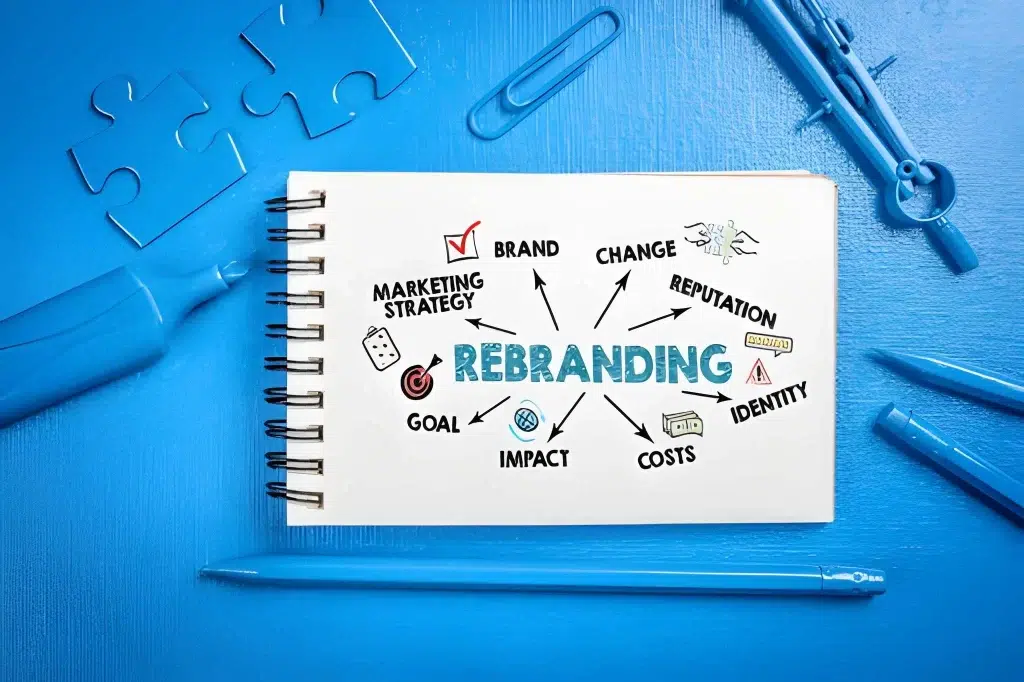
What makes rebranding crucial, then? Simply put, brands change just like people do. Consumer preferences never remain constant, competitors move more quickly, and your audience shifts. When your customers move into the future, new branding makes sure your company isn’t stuck in the past.
Some key benefits of rebranding include:
- Relevance: You continue to be in line with your target audience.
- Differentiation: Among the brands that require rebranding but have yet to take the leap, you stand out.
- Expansion: Entering new markets is frequently facilitated by a new identity.
- Trust: A well-executed rebranding marketing plan shows that you take expansion seriously.
Consider it an upgrade to your wardrobe. Even though your clothes from five years ago might still fit, do they still reflect who you are now? That’s right.
Signs It’s Time to Rebrand
Not sure if rebranding a business is right for you? Here are the signs:
- Your brand feels outdated: If your logo still screams 1998 clip art, you’re overdue for a brand refresh.
- You’ve outgrown your identity: Maybe you started as a niche brand but have now expanded. Your old story doesn’t capture your new offerings.
- Customer perception doesn’t match your vision: If people misunderstand what you do, a rebrand meaning is clear: you need to communicate better.
- You’re merging or pivoting: Company rebranding is often essential after acquisitions or big directional shifts.
- You’re invisible in your market: If competitors’ marketing campaigns make you look like the boring cousin at the party, it’s time to rebrand your business.

Common Mistakes Businesses Make
Rebranding isn’t always a fairytale. Many companies trip over common mistakes:
- Confusing rebrand with refresh: A full rebrand meaning is deep change, while a brand refresh is cosmetic. Don’t confuse the two.
- Forgetting your audience: Rebranding your business isn’t about your ego—it’s about your customer.
- No strategy: Jumping into rebranding marketing strategy without a roadmap leads to chaos.
- Inconsistency: Rolling out new branding without updating all platforms (website, Instagram, packaging) creates mixed signals.
Take the new Jaguar branding example. Jaguar didn’t just tweak its logo—it repositioned itself for a new audience. Compare that to Cracker Barrel’s new branding, which sparked backlash because customers thought the changes didn’t align with its heritage.
LEARN MORE: MISTAKES TO AVOID ON SOCIAL MEDIA
Case Study
1. Jaguar – Luxury Reinvented
Even after a lengthy history of name changes, Jaguar’s most recent move shows how rebranding can maintain a brand’s relevance. Moving from “classic luxury” to a sleeker, modern electric identity, the new Jaguar branding positions it as future-forward.
Lesson: Rebrand meaning should always be tied to where the industry is headed.
2. Cracker Barrel – Controversy Over Familiarity
Loyalists weren’t happy when Cracker Barrel added new branding components. Some felt the homely charm was taken away.
The lesson is that not every rebranded story succeeds. Excessive change can occasionally drive away loyal fans.
3. Instagram – A Bold Refresh
When Instagram ditched its retro camera icon for a colorful gradient, the internet lost its mind—for a week. Now, the design is iconic.
Lesson: Sometimes audiences just need time to adjust.
4. Pepsi – Multiple Flops Before Success
Rebranding a company involves more than just giving it a nice makeover. It involves adapting to your market, addressing gaps in perception, and presenting yourself in a way that appeals to your target audience. Rebranding has many advantages when done correctly, including increased growth, relevance, and loyalty. If you perform poorly, you run the risk of offending your fans.
Rebranding: How to Do It Right
Okay, so how do you actually pull it off? Here’s a step-by-step guide to rebranding your business:
- Audit your current brand. What works? What doesn’t?
- Define your goals. Why do companies rebrand? Clarify if it’s relevance, audience expansion, or repositioning.
- Research your audience. Rebranding marketing strategy without customer insight = wasted money.
- Build your narrative. New branding isn’t just a look, it’s a story.
- Design with purpose. From brand design to typography and colors, everything must reflect your values.
- Roll it out everywhere. Website, ads, social platforms—even how to rebrand your Instagram matters.
- Monitor and adjust. A brand is alive. Stay flexible.
Conclusion
Rebranding a company involves more than just giving it a nice makeover. It involves adapting to your market, addressing gaps in perception, and presenting yourself in a way that appeals to your target audience. Rebranding has many advantages when done correctly, including increased growth, relevance, and loyalty. If you perform poorly, you run the risk of offending your fans.
The key is to know the difference between a brand refresh and a full rebrand, study rebranding examples (good and bad), and always put your audience at the center of your new branding.
Thinking it’s time for a rebrand? SimplePlan’s rebranding services can help you do it right—without losing what makes your brand unique.
Frequently Asked Questions
-
What is rebranding in simple terms?
Rebranding meaning is giving your business a new identity—through visuals, messaging, or positioning—to better connect with your audience.
- Why do companies rebrand?
- What’s the difference between a rebrand and a brand refresh?
- How to rebrand a company successfully?
- Can I rebrand myself or my personal brand?
- What are some rebranding examples?
Let’s get to know each other
Accelerate your business potential with our dedicated team.