Let’s get to know each other
Accelerate your business potential with our dedicated team.

AI for Small Businesses
Making It Actually Useful
March 19,2026 5 MINUTES 44 SECONDS
MARKETING
Content
AI in marketing is no longer experimental for small businesses. It is becoming infrastructure. The real question is not whether to adopt it, but how to use it without losing your brand voice or strategic clarity.
Most small businesses aren’t struggling because they lack tools. If anything, they already have too many. What they really need is better leverage. That’s where thoughtful AI adoption can actually make a difference.
Key Takeaways- AI in marketing can help small teams move faster without increasing headcount.
- AI marketing for small businesses works best when there’s clear strategy behind it.
- AI lead qualification and customer behavior analysis often deliver the most immediate value.
- Too much automation can slowly weaken brand authenticity and brand voice.
- AI should strengthen human judgment, not quietly replace it.
AI in Marketing: How Small Businesses Should Use It (and Not Use It)
Small businesses are already operating inside the AI wave, whether they planned to or not. From email tools to CRM systems, AI in marketing is quietly embedded in everyday platforms. The conversation around AI adoption is not about hype anymore. It is about competitiveness.
There are numerous pressures facing many founders in the space of AI marketing for small businesses today. These two pressures come from competing businesses that are trying to automate their operations and from customers who want immediate, tailored experiences.
The introduction of AI agents into marketing practices has altered this concept of efficiency. Scheduling, sorting data, and segmenting customers no longer need to be done manually over several hours. For lean teams, AI agents for small businesses provide leverage. A three-person team can function like a ten-person one.
Ignoring this shift does not freeze the market. It only slows you down.
Where AI Helps Small Businesses Most
The smartest use of AI for small businesses focuses on friction removal, not replacement of thinking. Here are the areas where it creates meaningful impact.
1. Content Ideation and Drafting
Tools built for AI for SEO content writing can accelerate brainstorming and structuring. Instead of staring at a blank page, teams can start with a draft and refine it. It saves time. It does not replace voice.
Used carefully, AI for small business marketing reduces execution bottlenecks while keeping strategic control in human hands.
2. Lead Qualification
One of the most valuable applications is AI lead qualification.
Instead of manually reviewing every inquiry, systems can prioritize leads based on behavior, engagement signals, and historical conversion patterns. For sales teams, AI for lead qualification reduces wasted effort. It highlights who is ready to buy and who needs nurturing. That clarity improves focus.
3. Customer Insights
Understanding customers at scale used to require expensive research. Now, tools powered by customer behavior analysis can surface patterns quickly. Which pages convert best? Where do users drop off? What actions repeat?
For AI for small businesses, this is where things begin to feel genuinely useful. Instead of drowning in dashboards and scattered numbers, you start seeing direction. What was once messy and overwhelming becomes structured. Patterns stand out. Decisions feel more informed and less like educated guesses.
In that way, AI acts like a lens. It brings clarity to what’s already happening. But it cannot replace instinct or lived experience. It works best when it strengthens your judgment, not when it tries to take control of it.
Where AI Can Hurt Your Brand
The problem isn’t using AI. The problem is using it without thinking about the long-term impact.
Many AI marketing campaigns begin with good intentions. The goal is efficiency. Faster content. Faster responses. More output. But over time, something subtle can happen. Messaging starts to sound similar. Tone becomes flatter. Replies feel automated rather than considered.
That’s when personality begins to thin out.
If you’re not careful, the push for speed can quietly chip away at what makes your brand distinct in the first place. This usually shows up as:
- Generic messaging
- Predictable tone
- Robotic customer replies
- Over-automation
When that happens, your brand voice weakens. So does brand authenticity.
Customers may not articulate it clearly, but they feel it. Communication starts to sound templated. Even advanced AI tools for small businesses cannot replicate lived experience, conviction, or emotional nuance.
Some businesses experiment heavily with brand voice AI systems. They automate tone guides and content prompts. This works only when the original brand voice is clearly defined. AI can mirror a strong voice. It cannot invent one.
When automation crosses a certain line, it stops feeling helpful and starts feeling distant.
Common Mistakes Businesses Make While Using AI
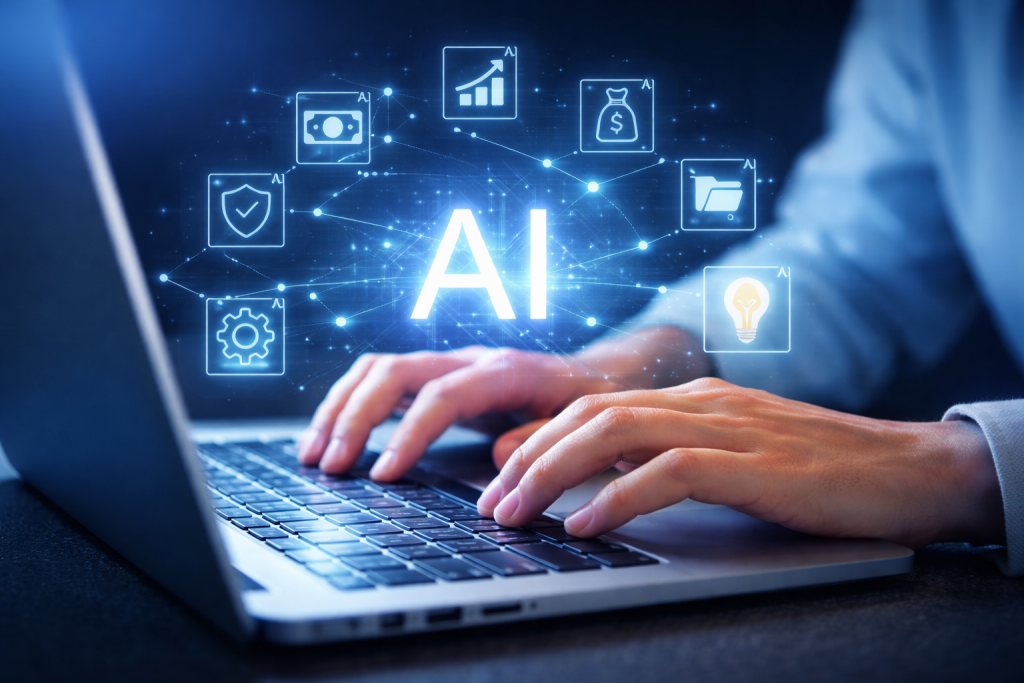
Many AI for small business owners misunderstand what the technology can realistically deliver.
A common mistake is assuming artificial intelligence for small businesses will fix strategic problems. It will not clarify positioning, build trust, or define your message.
Another mistake is treating AI as an assistant at first, then slowly allowing it to replace human review. The shift from carefully editing drafts, to having automated responses that are not monitored, to developing strategies reactively based on software’s suggestions, all contribute to an over-reliance on technology.
AI works best for enhancing our ability to make decisions, as opposed to replacing our ability to make decisions.
AI as Infrastructure, Not Identity
The smartest businesses treat AI in marketing tools like analytics platforms or design software. Powerful, yes. Strategic on their own, no.
Even the best AI tools for small businesses require direction.
In AI marketing campaigns, automation can increase output dramatically. But without clarity, higher output only scales confusion faster. AI multiplies what already exists.
If your brand positioning is strong, AI accelerates growth. If your positioning is unclear, AI accelerates noise.
LEARN MORE: SEO AND VOICE SEARCH
The Bigger Conversation
Questions like “Can AI replace marketers?” and “Will marketing be replaced by AI?” are often framed dramatically.
The more practical question is this:
How should businesses think about AI?
AI will not replace marketers. It will change how marketers work.
For small businesses, the advantage lies in leverage:
- Faster research
- Smarter segmentation
- Improved AI lead qualification
- Deeper customer behavior analysis
- Efficient AI for SEO content writing
But none of these replace strategic thinking.
AI handles scale. Humans handle meaning.

Conclusion
For small companies, AI in marketing has become a key component. The availability of these tools has made it easier than ever to use them, resulting in many companies adopting AI as an integral part of their marketing strategies. However, businesses face a risk when adopting an AI solution due to a lack of clarity.
Potential brand authenticity may be diminished if companies are solely reliant on automation, but the use of AI as an extension of an existing operation will improve efficiencies while maintaining the identity of the brand.
This concept is rather straightforward. Use AI to create less friction, but never use AI to replace conviction.
For businesses navigating this shift, clarity matters more than tools. And sometimes, before adding another system, it helps to revisit the strategy itself.
That conversation often matters more than the software.
That’s the space we spend a lot of time in at SimplePlan Media — helping brands think clearly before they scale loudly.
Frequently Asked Questions
-
What does AI actually do in marketing?
AI in marketing supports automation, data analysis, personalization, and content drafting. It helps businesses move faster and analyze behavior patterns at scale, but it does not replace strategic thinking.
- How are small businesses using AI today?
- Can AI help with content writing?
- Can AI replace marketers?
- Will marketing be replaced by AI?
Let’s get to know each other
Accelerate your business potential with our dedicated team.